
The Can-Do Line · Winter timetable 2026 (stop 2 of 6)
The last train for SAP ECC leaves on 31 December 2027. Who is on board your migration?
· All European Careers
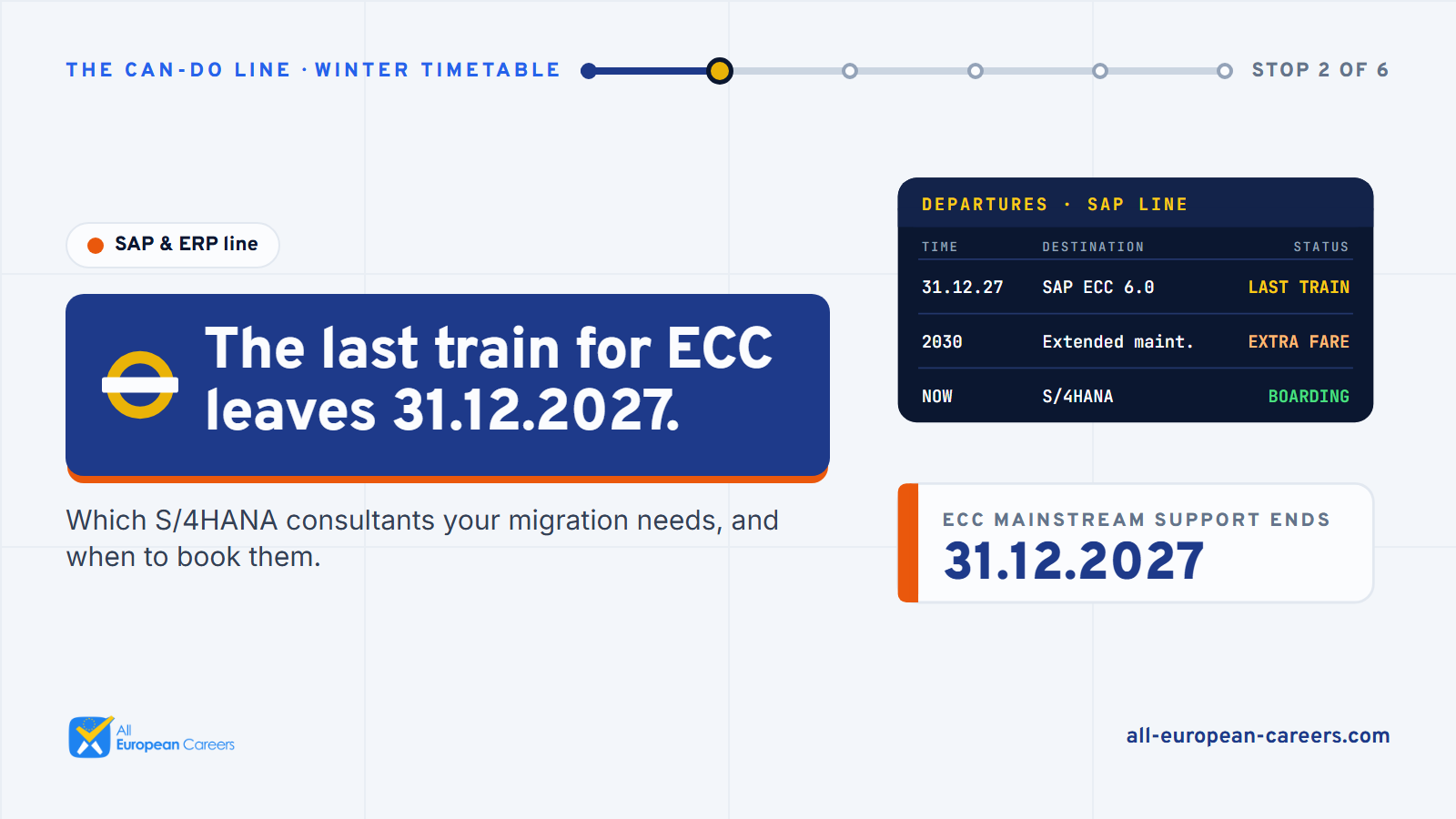
SAP ends mainstream maintenance for SAP ECC 6.0 on 31 December 2027. Extended maintenance is available until the end of 2030, at extra cost. For most companies running ECC, that turns S/4HANA from "on the roadmap" into a project with a date.
From today, that date is a little over thirteen months away. For a migration, thirteen months is not long. And the hardest part of most plans is not the technology. It is finding the people.
Why people, not software, set the pace
Every company with ECC is looking at the same calendar. That means the same experienced people are being asked for at the same time: S/4HANA finance and logistics consultants who have done a migration before, ABAP developers who can rework custom code, integration specialists for SAP BTP, and project managers who have steered a cutover weekend.
Those consultants are booked months ahead. The good ones are already on someone else's programme, and many will move to the next project directly from the last one. If your plan says "external SAP resources from Q1", the question is not whether they exist. It is whether they will still be free when you are ready to sign.
Most companies have a migration plan. Fewer have the people to carry it out.
The roles a typical S/4HANA move needs
Every programme is different, but the same profiles come up again and again:
| Role | What they do in the move |
|---|---|
| S/4HANA Finance consultant | Finance and controlling design, data migration, testing |
| S/4HANA Logistics consultant | Supply chain, sales and procurement processes (MM, SD, PP, EWM) |
| ABAP developer | Custom code analysis and rework, clean core extensions (RAP, CDS, ABAP Cloud) |
| SAP BTP / integration specialist | Extensions and connections to the rest of your landscape |
| Fiori / UI5 developer | The screens your users will actually work with |
| SAP GRC consultant | Access control, roles and audit readiness |
| SAP project manager / solution architect | Planning and steering the move, often using SAP Activate |
You won't need all of them at once. The architect and the finance lead usually come first; developers and testers follow; the cutover brings everyone together for a few intense weeks.
Greenfield, brownfield, or something in between
How you move shapes who you need. A greenfield move redesigns processes on a new system and leans heavily on functional consultants. A brownfield conversion keeps more of what you have, so custom code analysis and ABAP work become critical. Many companies end up in between, keeping some processes and redesigning others.
Experienced consultants have done both and can help you weigh the options. The decision is yours, ideally after a short assessment. But make it early, because it changes the profiles you need to book.
Clean core: a reason to plan the team carefully
The move is also a chance to clean up. Consultants who work to SAP's clean core principles keep custom code outside the core, so the next upgrade does not become another project. That is a skill, not a slogan. When you interview ABAP and BTP candidates, ask them how they kept a previous system clean, and listen for specifics.
A staffing timetable that works backwards from 2027
If your go-live has to happen before the end of 2027, a practical sequence looks like this:
- Now to January: assessment and architecture. Book the solution architect and the lead functional consultants first.
- Q1 2027: design and build. Add ABAP, BTP and Fiori developers as the scope becomes clear. This is where team extension often makes sense: a group of consultants inside your team, with one contact on the supplier's side.
- Q2 to Q3 2027: testing and data migration. Add testers and data specialists, and keep the core team stable.
- Q4 2027: cutover and hypercare. Make sure the people who built it are still there when it goes live.
The common mistake is to wait for the design to be finished before booking developers. By then, the developers you wanted are gone.
What to ask a supplier before you sign
- Have the consultants you propose done a migration before, and in which role?
- Can they start when we need them, given their current commitments?
- Will we have the same contact person throughout the programme, including when we need to add or replace someone?
- Can you provide a single specialist now and grow the team later?
The last question matters. Many SAP programmes start with one senior specialist to fill a gap, such as a senior ABAP developer, and add people as the project grows.
Common questions
When exactly does SAP ECC support end? Mainstream maintenance for SAP ECC 6.0 ends on 31 December 2027. SAP offers extended maintenance until the end of 2030 at extra cost, so most companies plan to be on S/4HANA before then.
Can we start with one consultant instead of a full team? Yes. Many programmes start with one senior specialist, such as a solution architect or a senior ABAP developer, and add people as the scope becomes clear.
Do SAP consultants work remotely? Many SAP roles today are hybrid or fully remote. Cutover and go-live usually need people on site, so agree the setup before anyone is proposed.
What happens after go-live? Your SAP landscape still needs support, enhancements, GRC and integration work. Plan for a smaller, stable team after hypercare rather than letting everyone leave at once.
How we can help
All European Careers places experienced SAP and ERP consultants on client projects: S/4HANA functional consultants, ABAP and Fiori developers, SAP BTP integration specialists and SAP GRC consultants, on assignment, as a team extension or as a permanent hire. We also place consultants for running SAP landscapes after the move.
Planning your move off ECC? Talk to us about your SAP project and book the people before the queue gets longer.